



The Corporate Knights Future 50 ranking recognizes Canadian companies whose business activities align with the transition to a sustainable economy. Montreal, June 2, 2023 – CarbiCrete has once again been ranked among the fastest-growing sustainable companies in Canada in the second annual Corporate Knights Future 50 ranking. Selected from a pool of over 8,000 Canadian…
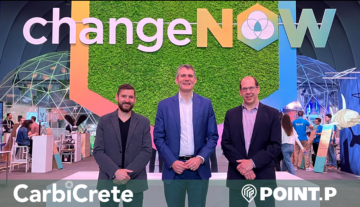
The collaboration aims to pave the way for certification and commercialization of CarbiCrete’s carbon utilization technology in Europe Paris, May 26, 2023 – CarbiCrete and POINT.P, a Saint-Gobain brand, announced today that they have signed a Cooperation Agreement. The announcement was made jointly by CarbiCrete CEO Chris Stern, and Nicolas Godet, Managing Director of POINT.P,…
The company was named to the 2023 Building Tech 50 List in the High-Performance Materials category by Chicago-based Builtworlds Montreal, May 11, 2023– CarbiCrete has once again been named to the 2023 Building Tech 50 List in the High-Performance Materials category. This list, created by Chicago-based Builtworlds, features leading companies in the landscape of the…

As governments around the globe prioritize low-carbon concrete in new building projects, finding suitable replacements for cement in the concrete mix is at the forefront of new developments in infrastructure technology. Although cement makes up only about 10% of concrete’s mix design by weight, its production is responsible for 90% of the emissions associated with…
As the construction sector continues to recover from the COVID-19 pandemic, a rise in demand is being met with a shortage in supply. Cement, the main active ingredient in concrete, has seen a recent shortage and a corresponding hike in prices. Writing for Bloomberg, Chris Bryant reported that in 2023, cement prices rose by around…
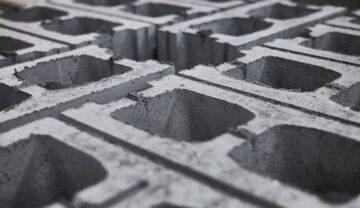
Our infrastructure makes up our first line of defense against a changing climate, and a corresponding increase in natural hazards. In order to create a resilient infrastructure, materials must be climate resilient. The MIT Climate Portal defines climate resilience as “how well something withstands, and how quickly it recovers from, natural hazards made worse by…
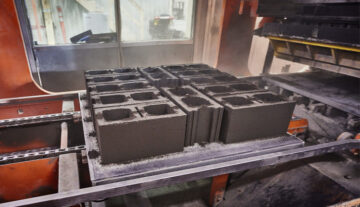
When starting a new building project, the choice of material for the structure’s foundation and envelope is an extremely important decision. The material of a building influences the project’s cost, timeline, and environmental impact, as well as the longevity and upkeep costs of the building itself. When choosing between materials like wood, steel, cast-in-place concrete,…
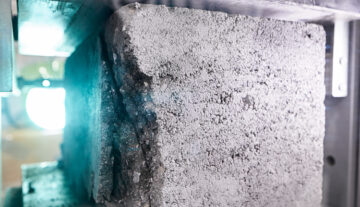
When reducing emissions in the built environment, the whole life cycle of a building, and the emissions produced therein, must be taken into consideration. Embodied carbon emissions are those resulting from the manufacturing and processing of the building’s materials. These emissions are often referred to as “hidden,” and thereby go unaccounted in considering a building’s…
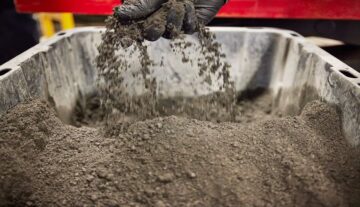
Construction is a necessary part of maintaining infrastructure and modernizing our communities. As the global community moves toward sustainable development and the reduction of greenhouse gas (GHG) emissions, the makeup of our buildings has a massive impact on the overall environmental impact of our society. Respectively, building operations and construction account for 28% and 11%…
In November 2022, the government of Canada published its Roadmap to Net-Zero Carbon Concrete by 2050, aiming to reduce the greenhouse gas (GHG) emissions of one of Canada’s most significant industries. Concrete in Canada is vast: the industry is responsible for approximately 158,000 direct and indirect jobs across the country while annually contributing $76 billion…